

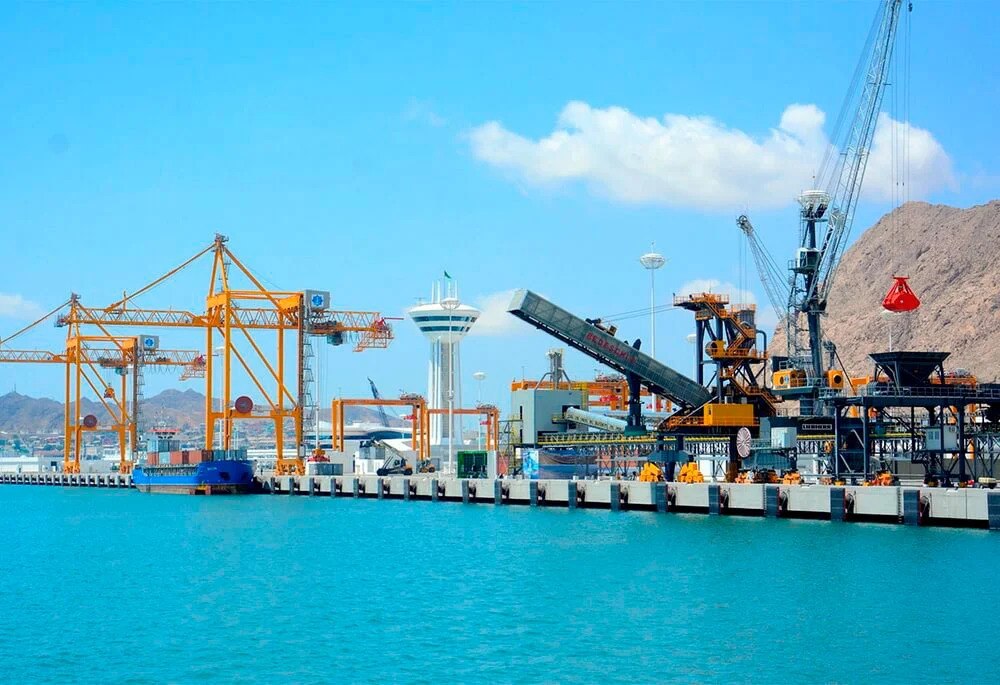
Five years ago, if you asked a forwarder about a route from Turkey into Central Asia, you'd almost always get two options: through Iran or through Russia. Today a third comes up more and more often — the Middle Corridor. It isn't a trend.
What the route actually is
The Middle Corridor — also called the Trans-Caspian International Transport Route — runs from Turkey through Georgia and Azerbaijan, across the Caspian Sea by ferry, and on into Turkmenistan, Kazakhstan and further to China. No Russian territory, no Iran.
On a map it looks like a sensible alternative. In practice, it's a route with one specific characteristic that gets left out of most explanations.
Why everyone is suddenly talking about it
Before 2022, the Middle Corridor existed but functioned mostly as a backup — the route through Russia was faster and more predictable, and most shippers chose it by default.
Then several things happened at once. Sanctions made the Russian route problematic for a lot of cargo and a lot of companies. Instability around the Red Sea, and periodically the Strait of Hormuz, has been regularly closing the usual maritime detours — something we've written about before, from one of our own shipments. China began deliberately investing in rail infrastructure along the corridor as part of diversifying its Belt and Road routing.
The result: forecasts put Middle Corridor cargo volumes several times higher by 2030. For us, as a forwarder actually operating on this route, that isn't an abstract statistic — it's something we see in how busy the route is every month.
The bottleneck nobody puts in the brochure
Here's what doesn't make it into the "new Silk Road" presentations: the Middle Corridor has one physical limit, and it isn't a border, customs, or paperwork. It's the ferry crossing the Caspian Sea.
Between the ports of Azerbaijan and Turkmenistan (or Kazakhstan), there's no bridge and no alternative — only ferries, and a limited number of them. Unlike a road or rail leg, where transit time can be estimated fairly precisely, the ferry wait is a floating number. Sometimes it's a few days. Sometimes longer, if several vessels need maintenance at once or Caspian weather keeps them in port.
This is the leg that breaks the tidy "distance divided by speed equals delivery date" math. It's exactly what we build into real timelines when we plan a route for a client — not just what goes in the marketing material.
What this means if you're shipping into Central Asia
Three practical takeaways from working this route day to day:
Put your buffer specifically on the ferry leg, not spread thin across the whole route. The road and rail legs of the Middle Corridor are reasonably predictable. Almost all the unpredictability is concentrated in one point — better to know that going in than to be surprised by it.
Cargo with a hard deadline deserves a separate conversation at the planning stage, not after it's already moving. If your delivery date is tied to contractual penalties — like our own shipment for Turkmenneft, where the deadline mattered — backup options are worth discussing before departure, not once the cargo is already queued for the ferry.
The Middle Corridor isn't a universal answer, it's one tool among several. Sometimes a classic sea route is faster and cheaper. Sometimes the Middle Corridor is the only sensible option, if other routes are closed or unworkable for other reasons. A good forwarder doesn't sell you one route — they fit the route to the specific cargo and the specific deadline.
Why we're writing about this at all
We work this route not because it's fashionable, but because we have a physical presence on it — our own office in Ashgabat, not just a partner on paper. Ferry schedules, real wait times, the current situation at the borders — these are things we check ourselves, not facts we take from someone else's report.
The Middle Corridor genuinely is the route of the future for shipping into Central Asia. But "route of the future" and "route without surprises" aren't the same thing. The difference between them is whether your forwarder tells you about the second part before you sign the contract, or after.
If you're planning a shipment to Turkmenistan or Central Asia and want to know which route actually fits your cargo — tell us about it.